Have you ever arrived somewhere and wondered how you got there?
I mean, you know how you got there, but you have no real memory of the trip. You drove, but you were thinking about a conversation from yesterday or what you have to do after work today. You didn’t get to see the beautiful Autumn leaves lining the streets.
Maybe you are eating lunch, but planning dinner while you do it. You didn’t taste a thing.
Maybe you are at your child’s soccer game and loop-style rehearsing how that unpleasant talk with your boss went three hours ago. You missed the whole game.
Most of us have had these experiences. Our attention moves backward into what has already happened and forward into what might happen next. We do need memory, planning, problem-solving, and imagination so this process isn’t bad or useless. But when our attention spends most of its time somewhere other than the now moment, we miss a surprising amount of our own lives.
This is where presence comes in.
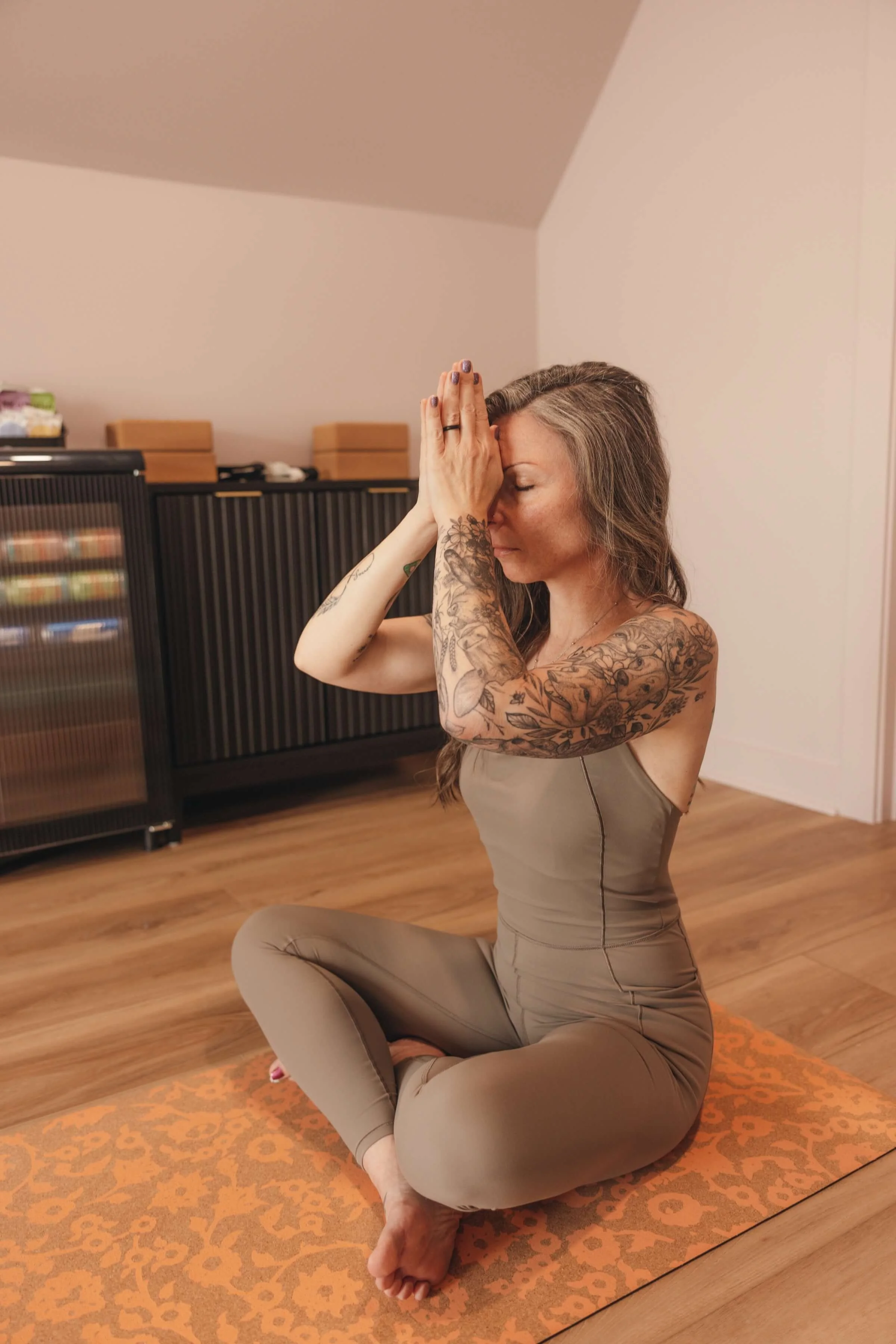
Presence is the simple practice of becoming aware of what is happening right now and staying with it. It means genuinely noticing your thoughts, emotions, physical sensations, surroundings, and experiences as they unfold, rather than automatically getting swept away by any one of them, which moves you into the past or future and robs you of the now. And now is what is real.
It sounds simple. In practice, it can be transformative. But it’s something we must strive to maintain. We can cultivate this state of being through the practice of mindfulness. Think of it working out and eating well if you want to get fit.
What Is Mindfulness, and How Is It Connected to Presence?
Mindfulness is often described as being intentionally aware of the present moment, without judging it. I find the without judgment part of this to be the most difficult. What it means to me is acknowledging whatever is happening, paying attention on purpose, and not labeling it (good, bad, right, wrong) or getting swept away by it.
By way of example, maybe I’m in meditation and realize I have pain in my shoulder. I acknowledge this, give it my absolute attention for a moment and let myself purposefully feel the discomfort. Then I actively decide to move away from it. I let it sit next to me, if you will, while I draw my attention back to my heart beat. I do this because I’m being mindful of my meditation practice, not my pain.
The beauty here is that we can choose which practices we want to use for mindfulness based on our current interests, passions or goals. The early morning hours are my favorite time of day so I practice mindfulness when I start making my coffee so that I can notice the sound of the grounds hitting the filter and the sound of the drip into the carafe. I sit down and take the first sip and savor the flavor and warmth fully. Once I’ve had a few good sips like that, I move on to whatever needs doing.
Presence and mindfulness are very closely related, but they are not the same. Presence describes the state of being here and now with whatever is happening. Mindfulness is a state of objective observation that helps you to wake up enough to live with more presence.
Mindfulness is not the same thing as meditation. Meditation can be one way of practicing mindfulness, but mindfulness can also be cultivated through ordinary activities like walking, eating, listening, breathing, moving (Yoga, martial arts, etc.), petting your dog, or simply noticing what is happening inside your body.
You do not have to empty your mind. You do not have to sit perfectly still. You do not have to feel peaceful.
You simply begin by noticing.
Why Is It So Difficult to Be Present?
If being present is so natural, why can it be so difficult?
Part of the answer is that your mind has a job to do. It remembers. It anticipates. It evaluates. It plans. It protects. It looks for patterns and tries to make sense of what has happened so that you can navigate what comes next.
There is nothing wrong with having a mind that does these things.
The difficulty comes when we become so absorbed in our thoughts that we stop noticing that we are thinking. A worry can begin to feel like a fact. A memory can pull us completely back into the past. A future possibility can create a stress response in the present. There are a few dangers here. First, your body doesn’t actually know the difference between an active threat and an imagined one. This means that your heart rate increases, your breath becomes rapid and shallow, your system releases stress hormones like adrenaline and cortisol. This is not an ideal way to spend your time if you don’t have an actual problem in front of your RIGHT NOW because it can wreak havoc on your internal systems. Second, when you do this, you are giving away valuable moments of your life.
Practicing mindfulness gives us another option: notice the thought, notice the feeling, notice the body, and then choose what to do next.
That small space between noticing and reacting is one of the reasons presence can matter so much. It gives you back your choice in how you show up for your life.
How Mindfulness May Support Everyday Well-Being
Mindfulness is not a magic switch, and it is not a promise that difficult experiences will disappear. Research on mindfulness-based interventions, including Mindfulness-Based Stress Reduction (MBSR), suggests that these practices can be associated with improvements in several aspects of psychological well-being.
A 2024 MBSR study among university students found reductions in anxiety, depression, and perceived stress, along with improvements in measures of mindfulness and self-kindness.
What makes the practice especially interesting is that presence touches more than one part of our experience.
Mental Well-Being: Learning to Notice the Mind
Our thoughts can be incredibly persuasive. When a thought appears, we often experience it as though it were an objective description of reality.
Mindfulness offers a little distance. Instead of simply thinking, “I cannot handle this,” you might notice, “I am having the thought that I cannot handle this.” The problem has not necessarily changed, but your relationship to the thought has.
That distinction can create room for curiosity, perspective, and choice. It can let you handle it differently, offering the opportunity to choose a different outcome for yourself because you see there are other options.
Emotional Well-Being: Making Room for What You Feel
Presence does not ask you to turn difficult emotions into positive ones. It asks you to notice what is actually here.
You might notice sadness without immediately pushing it away. You might recognize irritation before it becomes an argument. You might feel anxiety in your chest or tension in your shoulders and realize that your body is responding before your conscious mind has caught up.
When we become more aware of an emotion, we have an opportunity to respond to it with greater care rather than automatically acting from it. This can help us achieve the outcome we actually want…letting sadness fully run through our bodies so we don’t store it as pain and trauma, talking through the miscommunication instead letting it erupt into a heated argument, etc.
Physical Well-Being: Coming Back into the Body
Presence is not only something that happens in the mind.
Your body is giving you information all the time: the rhythm of your breathing, the tension in your jaw, the position of your shoulders, the feeling of your feet against the floor, the sensations of hunger or fullness, warmth or coolness, fatigue or energy.
Mindfulness can help us become more attentive to these signals. That does not mean every sensation needs to be interpreted or fixed. Sometimes noticing is enough.
The body can become an anchor and trusted ally that helps bring attention out of the swirl of thought and back into the moment.
Spiritual Well-Being: Remembering What Matters
For some people, presence also has a spiritual dimension.
This does not have to mean adopting a particular religion or belief system. It may simply mean becoming more aware of your connection to yourself, to other people, to nature, to your values, or to something larger than the immediate demands of the day.
Presence can create moments in which life is experienced rather than merely managed.
That experience is deeply personal. Science can study aspects of mindfulness and well-being, but the meaning someone finds in a moment of presence belongs to that person.
Presence Does Not Mean You Have to Feel Calm
This is worth saying clearly because mindfulness is sometimes presented as though the goal is to become serene.
You can be present and feel anger. Present and feel sadness. Present and feel uncertain. Present and feel excited. Present while something hurts emotionally and physically. Present while you are waiting for an answer you desperately want.
Presence does not require you to approve of what is happening. It does not require you to stop wanting something to change.
It simply invites you to notice what is here before deciding what comes next.
How to Practice Presence in Everyday Life
You do not need a special room, an hour of free time, or a meditation cushion to begin practicing mindfulness. You can, and should, practice it using the tasks you already do each day. Making coffee, doing dishes, walking the dog, showering…you get the point.
A Small Practice You Can Try Right Now
Take a comfortable breath.
Feel your feet, or feel the surface supporting you.
Notice one thing you can hear.
Notice one thing you can see.
Notice one sensation in your body.
Now notice what your mind is doing.
You do not have to change any of it. Just notice.
Then take one more comfortable breath and ask yourself: What is here for me right now?
How Presence Connects to the Work at Blue Bird Reiki and Wellness
Presence is one of the threads running through the work at Blue Bird.
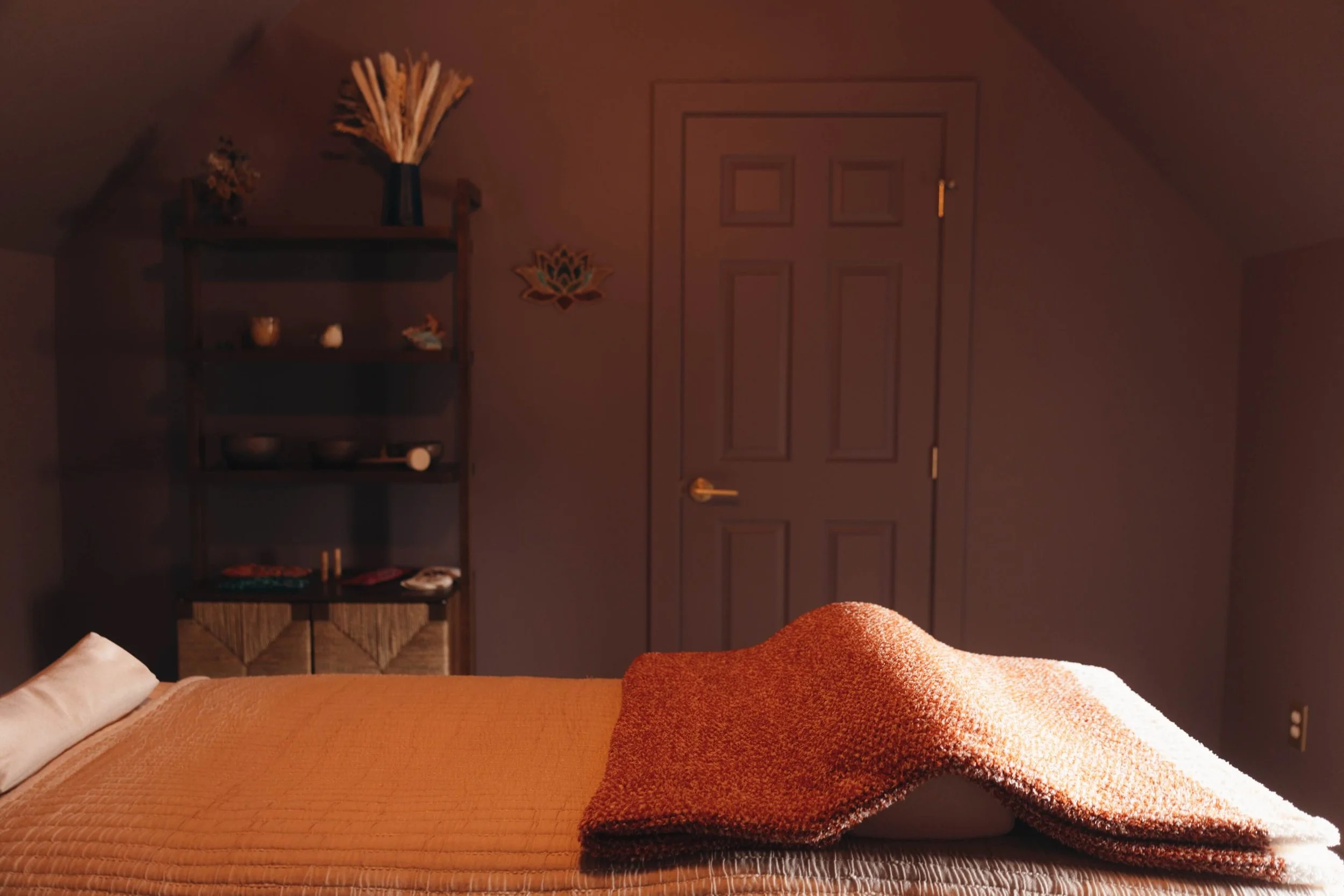
Reiki can offer a quiet space to slow down and turn attention inward, to rest and notice. Tuning fork sound therapy brings awareness through sound and vibration. Trauma-informed somatic breathwork invites attention into the breath and body. Mindfulness coaching can help you develop practical ways of bringing greater awareness into everyday life. Gentle movement and personalized embodied yoga practices can offer another pathway into the experience of being here, in your body, in this moment.
These practices are different, and each person may experience them differently. What connects them is the invitation to pause, notice, and reconnect and remember.
At Blue Bird, I am less interested in teaching you how to become someone different than I am in creating space for you to reconnect with what is already here for you.

Mindfulness and Presence in Fenwick Island, Delaware
If you are looking for mindfulness coaching, Reiki, sound therapy, breathwork, or other wellness practices in Fenwick Island, Selbyville, or the surrounding coastal Delaware area, Blue Bird Reiki and Wellness offers a quiet, personalized space to explore.
My intention is to meet you where you are, without a one-size-fits-all approach. You do not need to arrive knowing how to meditate. You do not need to be experienced in mindfulness. You simply need a willingness to pause and notice.
A Final Thought
There is so much of life that happens while we are somewhere else.
The conversation we only half heard. The meal we ate without tasting. The walk we took while thinking about tomorrow. The quiet moment we rushed through because there was always something else to do.
Presence does not ask us to stop planning, remembering, working, caring, or moving forward.
It simply invites us to come back often enough to actually be here for the life we are living.
Sometimes that return takes a breath. Sometimes it takes a pause. Sometimes it begins with the simple realization: I am here.
And from here, we can begin again.
Welcome to Blue Bird Reiki and Wellness
Blue Bird Reiki and Wellness was created as a space where you can slow down, reconnect, and remember what has always been within you.
My intention is to offer personalized, compassionate, and trauma-informed wellness experiences that honor the whole person. Through Reiki and other supporting practices, we can explore the relationship between rest, awareness, connection, and the ways we move through the world.
There is no expectation that you arrive with everything figured out. You are invited to come as you are, with your own experiences, questions, hopes, and needs.
Whether you are beginning your exploration of Reiki or returning to a practice that already feels meaningful to you, I would be honored to welcome you to Blue Bird.
You are welcome here.