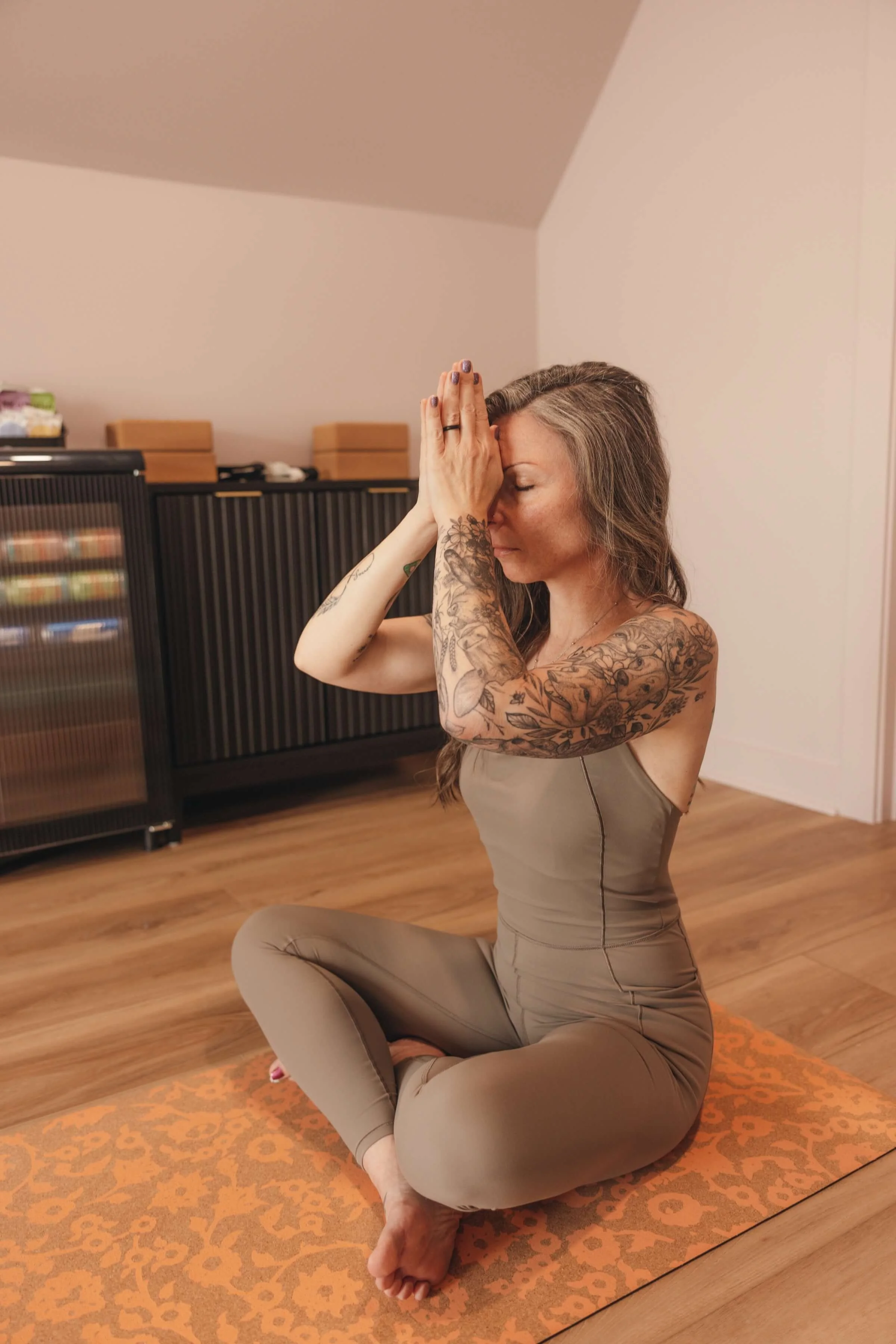
There is a difference between moving your body and being present in your body while you move.
You can move through a yoga practice thinking about your grocery list. You can hold a pose while judging yourself for not doing it ‘right’ or as ‘good’ as the person next to you. You can move through wind-down stretching (because you’ve been told over and over how good it is for you) while thinking about the seventeen things you have to do when you sit down to work.
And you can move in an entirely different way.
You can notice your breath. Feel your feet connecting with the floor. Notice where you are holding tension, where you feel strong, where you feel uncertain, and where your body seems to be asking you to slow down.
You can move without trying to force your body into a shape.
This is part of what I mean when I talk about embodied yoga and gentle, intentional movement at Blue Bird Reiki and Wellness.
It is yoga-esque and it invites you to come home to your body. To remember who and where you are and that you can move in a way that you feel nourished.
What Is Embodied Yoga?
Embodied yoga is not necessarily a particular style of yoga. Rather, it describes an approach to movement that emphasizes awareness of the lived experience of being in your body.
Instead of asking only, ‘Can I get into this pose?’ embodied yoga also asks:
What do I notice as I move?
How does this feel in my body?
What happens to my breath?
Where am I holding tension?
What changes when I slow down?
What does my body need today?
This approach can turn a familiar yoga posture into something much more personal.
The goal is not to make your body perform a shape perfectly. The goal is to develop a more attentive relationship with your body as you move through it.
And that relationship can be valuable far beyond the yoga mat.
Gentle Movement Does Not Mean Doing Less
The word ‘gentle’ can sometimes make movement sound passive. That is not what it means when you practice at Blue Bird.
Gentle movement can still challenge you. Depending on the practice and the individual, it can support mobility, flexibility, balance, coordination, strength, and physical confidence. Research on yoga in older adults, for example, has found improvements in balance, flexibility, and muscle strength.
There is a difference between challenging your body and overriding it.
Intentional movement asks you to notice that difference.
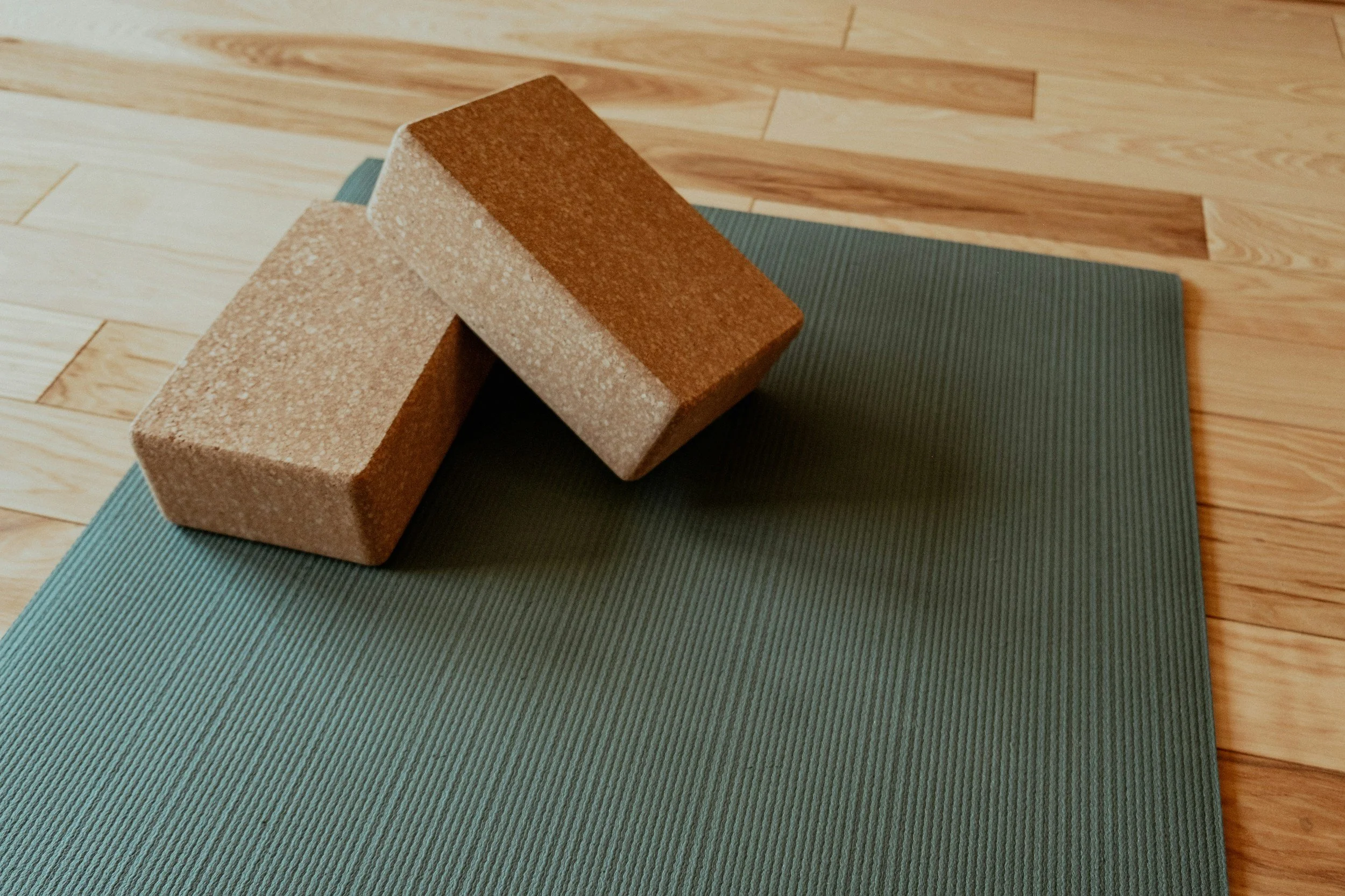
You may choose to move more slowly. You may modify your posture. You may use a prop. You may pause. You may explore a smaller range of motion rather than automatically reaching for the biggest one. You might lean in a little deeper or linger a little longer.
Sometimes the most useful movement is not the movement that takes you the farthest. It is the movement that helps you become more aware. Every body is different and your body needs different things on different days. When you start to become more aware of what is going on inside your body, you instinctively know what you need. When you listen to, and follow that knowing, your body rewards you.
The Physical Benefits of Intentional Movement
The physical practice of yoga is a form of movement that can engage strength, flexibility, balance, coordination, and mobility.
Depending on the practice, gentle, intentional movement can give you an opportunity to explore:
Flexibility and mobility
Balance and coordination
Strength and muscular endurance
Postural awareness
Range of motion
Breath awareness
Body awareness
Yet there is another dimension of movement that is easy to overlook but so incredibly important.
Your body is not separate from your experience of being you.
Your Body Is Always Giving You Information
Your body is constantly receiving and responding to information.
When you listen, you might notice things like your heart beat; your breathing, whether shallow and quick or slow and deep; your brow-line, whether relaxed and at ease or tight and drawn together; or maybe you notice your stomach is doing flip-flops or there are flutters of excitement.
This awareness of signals arising from within the body is often discussed as interoception. Interoception is a complex process, but there is promising research-backed evidence that shows a link between mindfulness practices, like embodied yoga and gentle movement, to improved overall body awareness.
Rather than saying that embodied yoga automatically makes us more aware of our bodies, I would put it more simply:
Embodied yoga gives us a place to practice paying attention to the body. It is one of many ways we can cultivate a life of more presence where we simply feel better, more ourselves, and more nourished.
Embodied Yoga and the State of Mind
This is where movement becomes more than physical exercise.
When you bring attention to your breath, sensations, and movement, you are also practicing present-moment awareness through what is sometimes called mindfulness.
You are not solving tomorrow. You are not replaying yesterday. For a few minutes, you are in the here-and-now, showing up for your life.
That does not mean your thoughts disappear. They won’t.
Your mind will find a way to wander while you are breathing your way through Cat/Cow Pose. You may suddenly remember an email you need to send or a bill you need to pay. You may start planning dinner halfway through a forward fold.
That is not failure. That is your mind doing its natural thing.
What you get better at is noticing.
Notice. Return. Move. Breathe.
That returning is part of the practice.
Movement Can Give the Mind Somewhere to Go
For some people, sitting still and trying to meditate can feel incredibly difficult. The mind becomes louder. The body feels restless. There is an urge to get up and do something.
Gentle movement can offer another doorway into mindful meditation so that it doesn’t feel so foreign, scary and impossible.
Rather than asking you to stop moving so that you can become present, it invites you to become present through movement.
You might notice the shifting weight between your feet. The movement of your spine. The sensation of your arms reaching overhead. The rhythm of your breath. The moment your muscles engage. The moment they release.
Movement becomes an opportunity to pay attention.
Yoga, Stress, and Everyday Well-Being
Yoga practices can be a useful way of creating space to slow down, notice the body and breath, and practice responding to stress with greater awareness.
For me, that distinction matters. The purpose is not to promise that movement will make life stress-free. That’s not really possible; nor do I believe it to be ideal. Stress can create opportunities for learning and growth, but we will talk about that in another discussion. The purpose here is to create opportunities to meet ourselves differently while life is happening so that we can thrive through stress when it shows up.
You Do Not Have to Be Flexible to Practice Embodied Yoga
This deserves its own section because it may be one of the biggest misconceptions about yoga.
You do not have to be flexible to practice yoga. You don’t have to touch your toes. You don’t need perfect balance. You certainly don’t need to look like an airbrushed, AI-generated version of yourself.
Yoga can meet you where you are, and it will. Every single time you practice.
A posture can be modified. A movement can become smaller. A prop can provide support. A chair can become part of the practice. You can pause. You can breathe. You can explore.
Your body does not have to earn its place on the mat.
What Makes Embodied Yoga Different?
For me, embodied yoga is less about achieving a pose and more about experiencing yourself while moving through it.
That might mean holding a familiar posture for fewer breaths because your body is asking for less today. It might mean staying longer because you feel stable and curious. It might mean noticing that one side of your body feels different from the other.
It might mean discovering that you have been gripping your jaw for an entire practice.
It might mean realizing that you can move with strength without moving aggressively.
There is no single correct experience.
The practice becomes a conversation between attention and movement.
Embodied Yoga at Blue Bird Reiki & Wellness
At Blue Bird, I approach yoga as an opportunity to develop a more compassionate and attentive relationship with your body.
My approach to gentle, intentional movement is personalized rather than prescriptive.
Your body is not the same as anyone else’s body. Your history is different. Your energy is different. Your mobility, strength, balance, comfort, and needs are different.
So your practice can be different, too.
Sometimes we may focus on mobility. Sometimes strength. Sometimes balance. Sometimes flexibility. Sometimes breath and awareness. Sometimes I’ll encourage you to go off script and lead your practice if that’s what feels good for you.
And sometimes the most important thing we can do is slow down enough to notice what is already happening.
For me, that is the heart of embodied yoga.
Not forcing. Not performing. Not perfecting.
Listening.
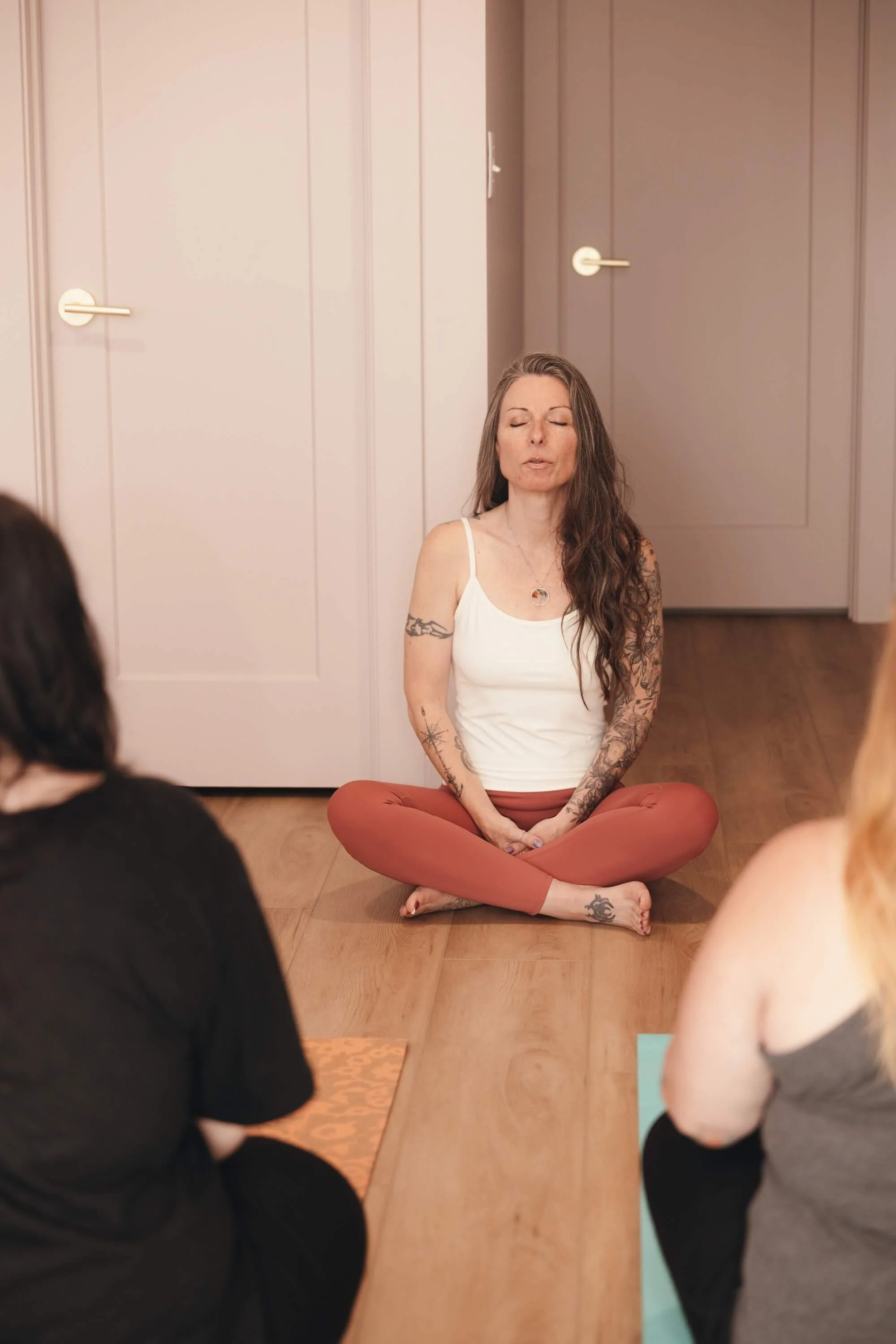
Gentle Yoga and Mindful Movement in Fenwick Island, Delaware
If you are looking for personalized embodied yoga, gentle movement, or flexibility coaching in Fenwick Island, Selbyville, or the surrounding coastal Delaware area, Blue Bird Reiki and Wellness offers an individualized approach to movement and well-being.
You do not need to be an experienced yogi. You do not need to be particularly flexible. You do not need to know exactly what you need before you arrive.
We can begin with where you are.
And then we can listen from there.
Welcome to Blue Bird Reiki and Wellness
Blue Bird Reiki and Wellness was created as a space where you can slow down, reconnect, and remember what has always been within you.
My intention is to offer personalized, compassionate, and trauma-informed wellness experiences that honor the whole person. Through Reiki and other supporting practices, we can explore the relationship between rest, awareness, connection, and the ways we move through the world.
There is no expectation that you arrive with everything figured out. You are invited to come as you are, with your own experiences, questions, hopes, and needs.
Whether you are beginning your exploration of Reiki or returning to a practice that already feels meaningful to you, I would be honored to welcome you to Blue Bird.
You are welcome here.